Photography Series

Artist Statement – “Different Eyes, Shared Perspective”

This collage explores the idea that friendship allows us to see the world through more than one perspective. Each eye represents a different person, a different way of seeing, and a different lived experience. Although the eyes appear similar at first glance, they each hold unique details, colors, and textures. These differences reflect how every individual carries their own history, emotions, and understanding of the world.

Friendship does not require people to see everything the same way. Instead, it creates space for those differences to exist. True friendships grow through listening, empathy, and the willingness to understand another person’s point of view. Just as each eye views the world from a slightly different angle, friends interpret life through their own experiences.

By placing the images together in a single composition, the piece suggests that connection can exist even when perspectives vary. The eyes are separate, yet they share the same frame, symbolizing how friendships bring different individuals into a shared space of trust and support.

Ultimately, this work reflects the idea that friendship is not about identical viewpoints, but about the ability to look at the world together and find common ground. Through openness and respect, friendships have the power to bridge differences and create meaningful connection.

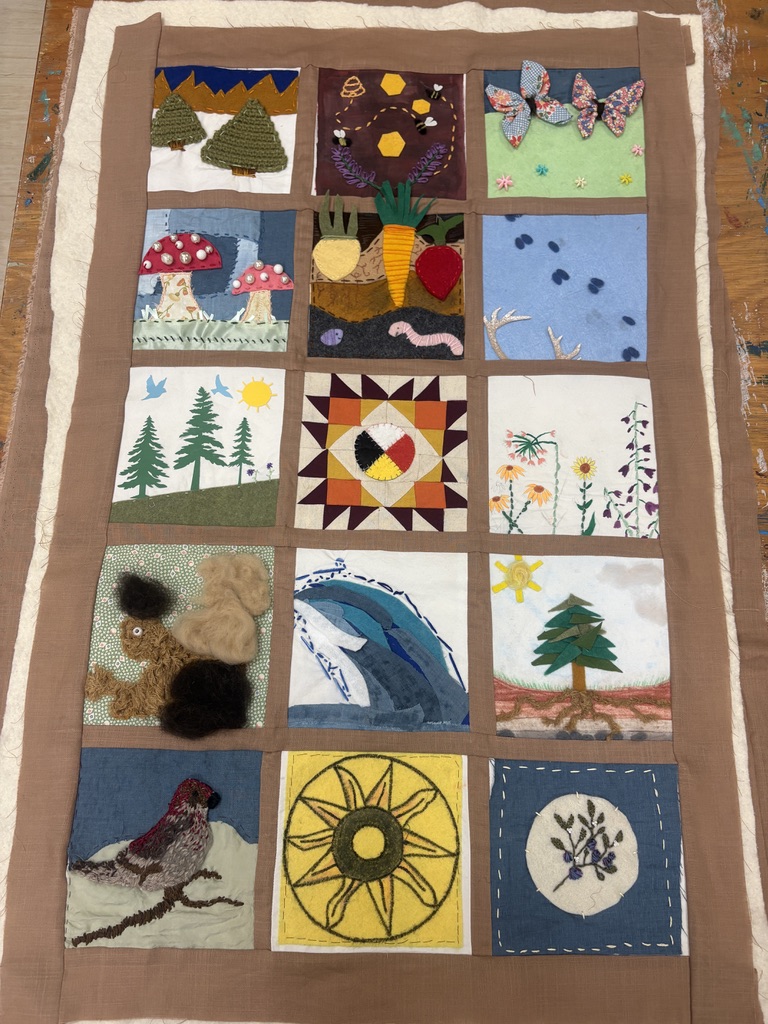
Collaborative Class Quilt

Artist Statement – “Into the Forest I Go”

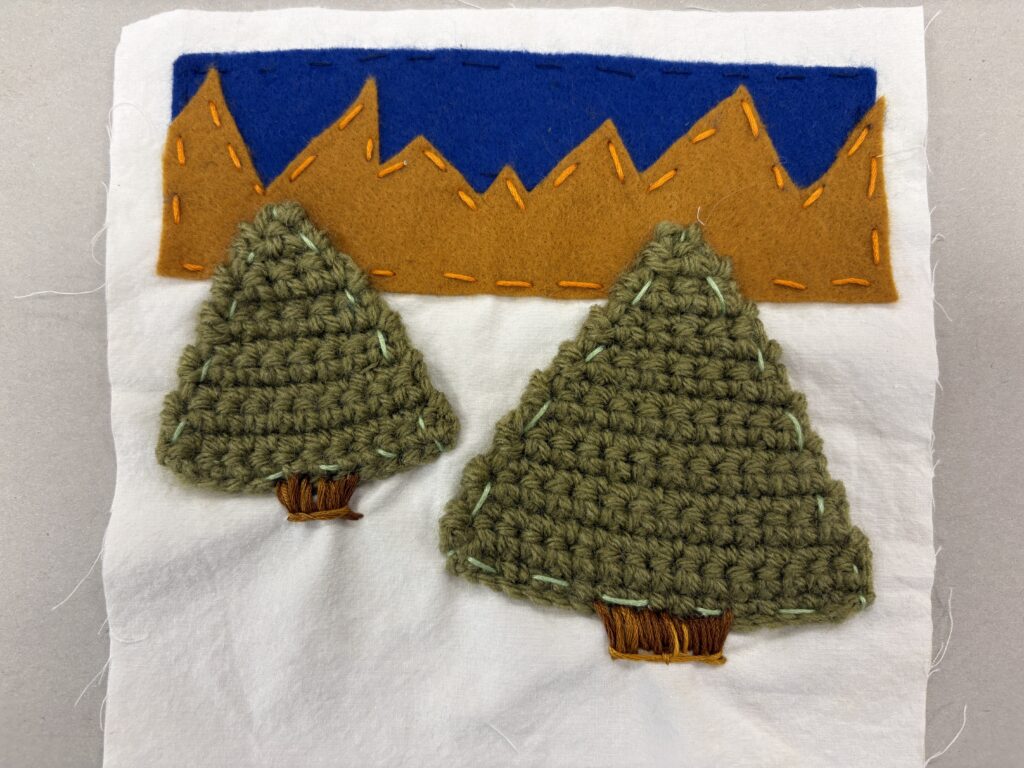
This piece represents the Douglas fir. I wanted to create a full landscape to emphasize its strength, adaptability, and place within local forest ecosystems. From the beginning of the project, I knew I wanted to work with yarn to crochet, as it is a medium I feel deeply connected to and passionate about. The textured stitches reflect the dense needles and layered growth of the Douglas fir, while the variation in tree size suggests different stages of growth and their roles within the forest. Ecologically, the Douglas fir is a keystone species that provides shelter, stability, and connection for surrounding life, reinforcing the idea that even individual elements are essential to the health of the larger ecosystem.

The process began by laying out the felt base, intentionally leaving space around the edges to allow the quilt to be sewn together as a collaborative class piece. I then cut and sewed the sky and mountains, building the background before attaching the crocheted trees. The trees were sewn on next, followed by the final details of the trunks, which helped ground the landscape visually. I used acrylic yarn crocheted with a 3.5 mm hook for the trees, felt for the background, embroidery thread for the mountains and tree details, and sewing thread for the sky and trunks. While the hand-sewing process was time-consuming and often painful on my fingertips, every poke was worth it to see the piece come together. Within the quilt, this square contributes texture, grounding, and a sense of place, symbolizing how each individual piece, like each Douglas fir, plays a vital role in sustaining the whole ecosystem.

Self Assessment Checklist

  • Intentional use of the space (Complete)
  • Multiple materials (2+) (Complete: 4 Materials)
  • Your element, represented within the context of our local forest ecosystem (Complete)

Monochromatic Atmospheric Perspective

Artist Statement – “Where the Pines Rest

This piece explores depth, stillness, and atmosphere through intentional colour mixing and layered composition. Using acrylic paint and an angled brush, I focused on building a landscape through gradual shifts in hue and shade.

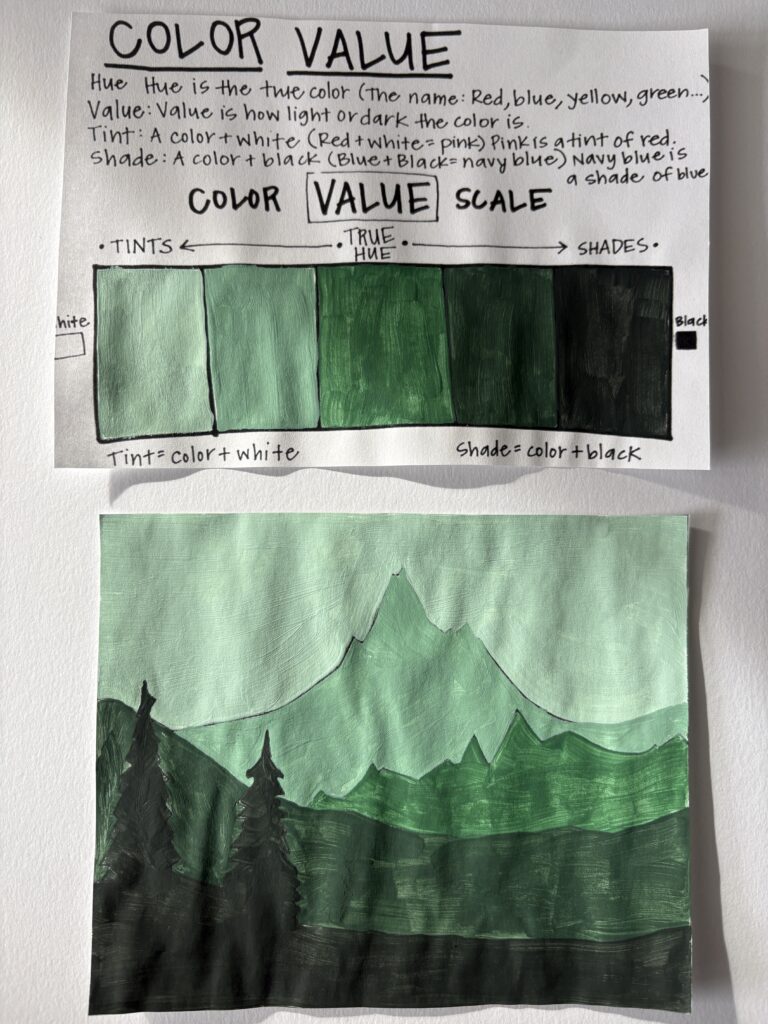
We began this piece by practicing color value. First, we created a value scale using one true hue (green). We mixed tints by starting with white and slowly adding green, and mixed shades by starting with green and gradually adding black. This helped us clearly see how value changes from light to dark.

Once we understood the range of values, we applied those mixes to a landscape. We started with the lightest tint at the top of the page and worked downward, gradually using darker values to create depth in the mountains and foreground. The darkest shades were used in the trees and front layer to show contrast and perspective.

This practice helped us understand how value creates space, dimension, and mood in a painting.

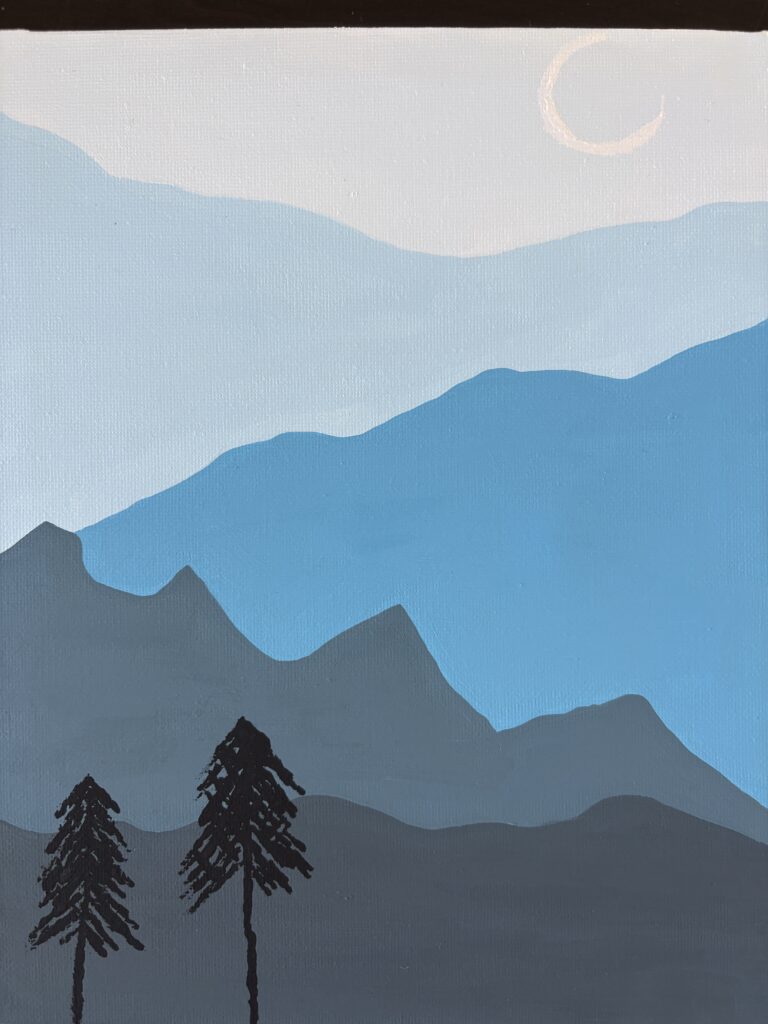
Before beginning my canvas painting, I mixed all of my colours in advance. Starting with a true blue as my base, I created a range of light tints by beginning with white and slowly blending in blue. I then developed deeper shades by starting with blue and gradually adding black. Preparing the full spectrum beforehand allowed me to move confidently through the painting process, focusing on placement and layering rather than remixing along the way.

I began at the top of the canvas with the lightest tint and worked my way downward, gradually transitioning into darker values. This method created a sense of depth as each mountain layer became richer and more grounded. The angled brush helped define the soft, rolling silhouettes of the landscape.

The white crescent moon and the black trees were added at the end to complete the composition. The moon brings balance and quiet contrast to the open sky, while the silhouetted trees anchor the foreground and provide a strong visual frame.

This work is about atmosphere more than detail. About the feeling of standing in stillness, surrounded by layered mountains at dusk. Through careful preparation and gradual tonal shifts, the piece reflects both planning and calm presence in the creative process.

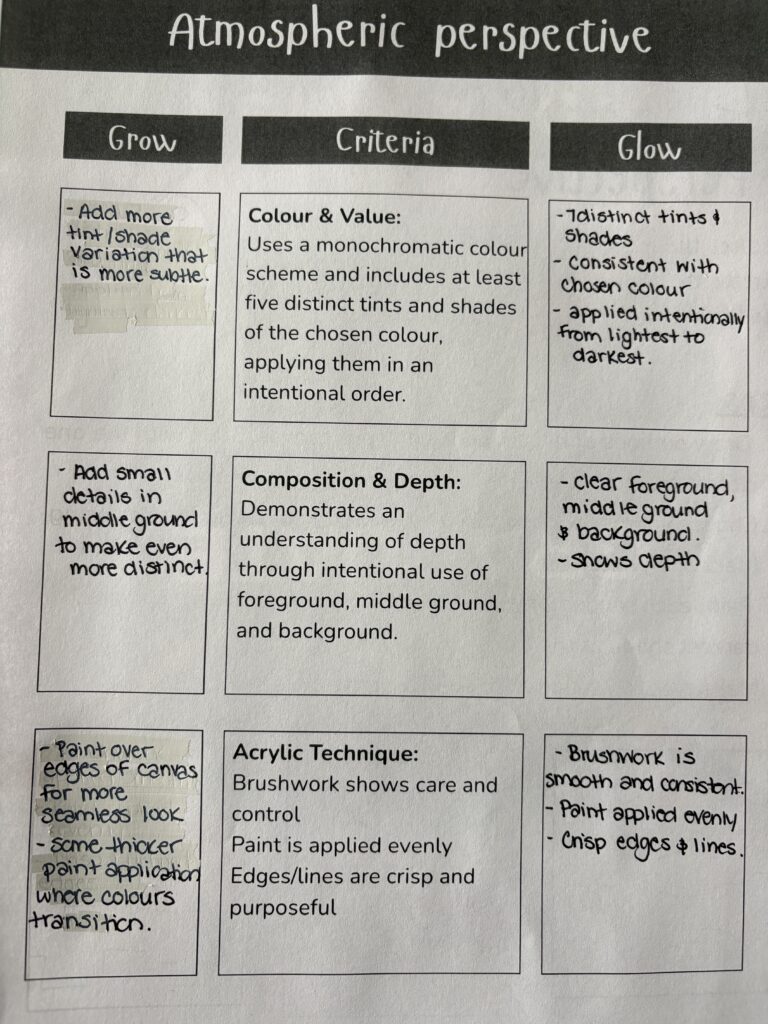
Self Assessment