Photography Series

Artist Statement – ā€œDifferent Eyes, Shared Perspectiveā€

This collage explores the idea that friendship allows us to see the world through more than one perspective. Each eye represents a different person, a different way of seeing, and a different lived experience. Although the eyes appear similar at first glance, they each hold unique details, colors, and textures. These differences reflect how every individual carries their own history, emotions, and understanding of the world.

Friendship does not require people to see everything the same way. Instead, it creates space for those differences to exist. True friendships grow through listening, empathy, and the willingness to understand another person’s point of view. Just as each eye views the world from a slightly different angle, friends interpret life through their own experiences.

By placing the images together in a single composition, the piece suggests that connection can exist even when perspectives vary. The eyes are separate, yet they share the same frame, symbolizing how friendships bring different individuals into a shared space of trust and support.

Ultimately, this work reflects the idea that friendship is not about identical viewpoints, but about the ability to look at the world together and find common ground. Through openness and respect, friendships have the power to bridge differences and create meaningful connection.

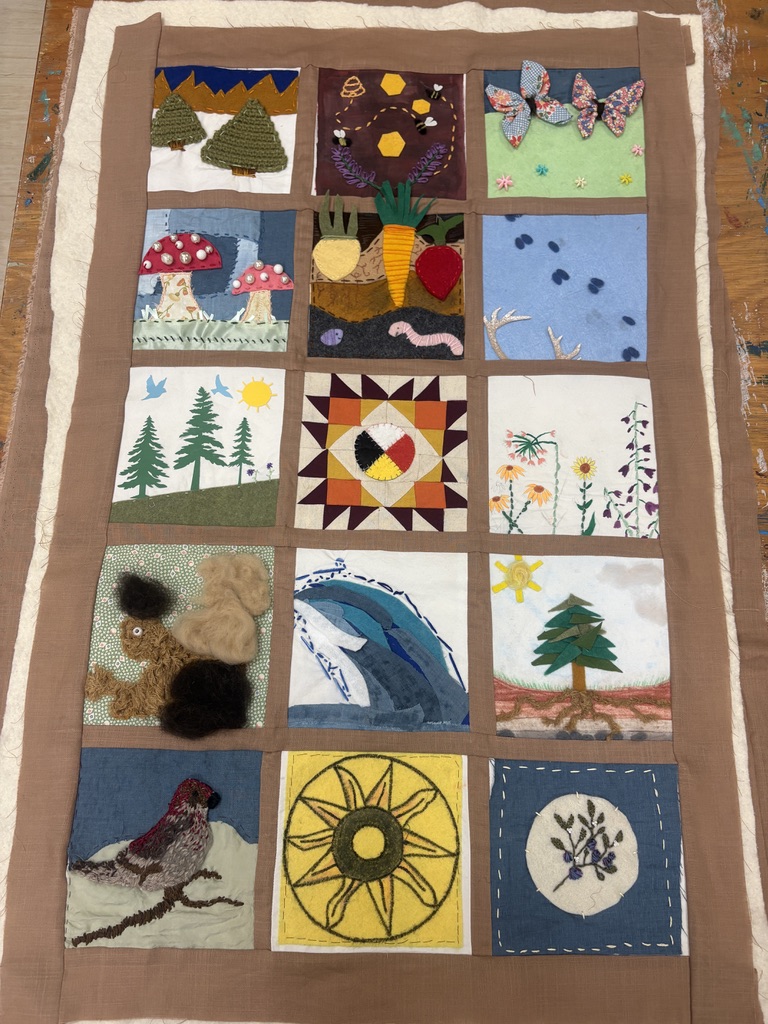
Collaborative Class Quilt

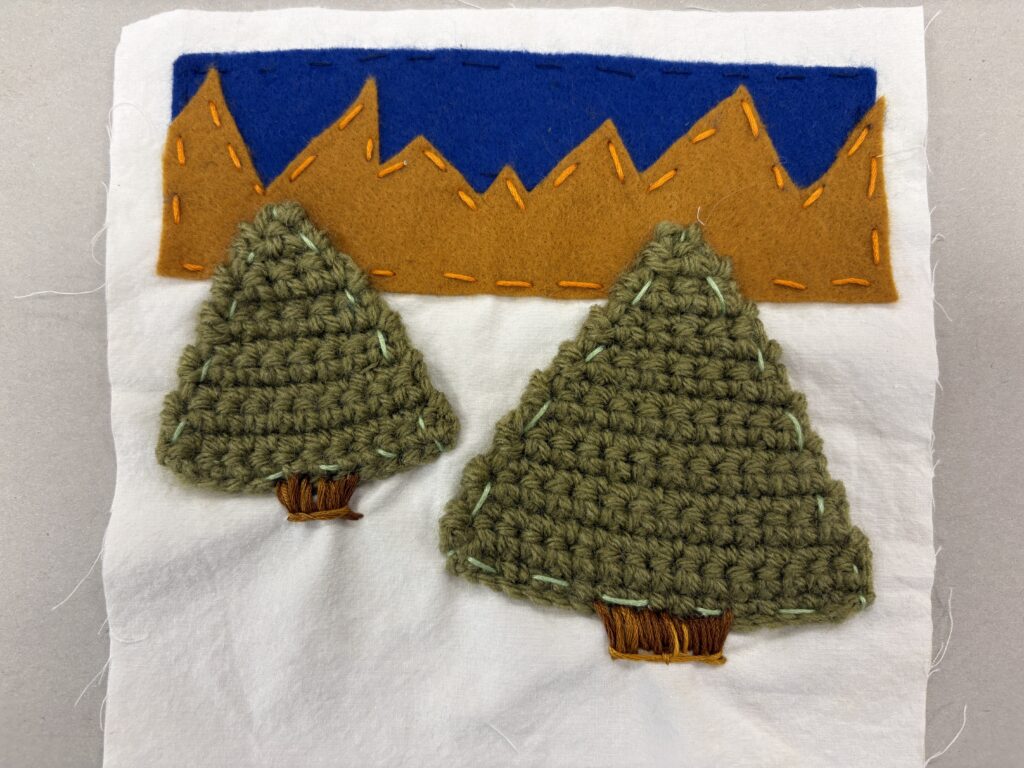
Artist Statement – “Into the Forest I Go”

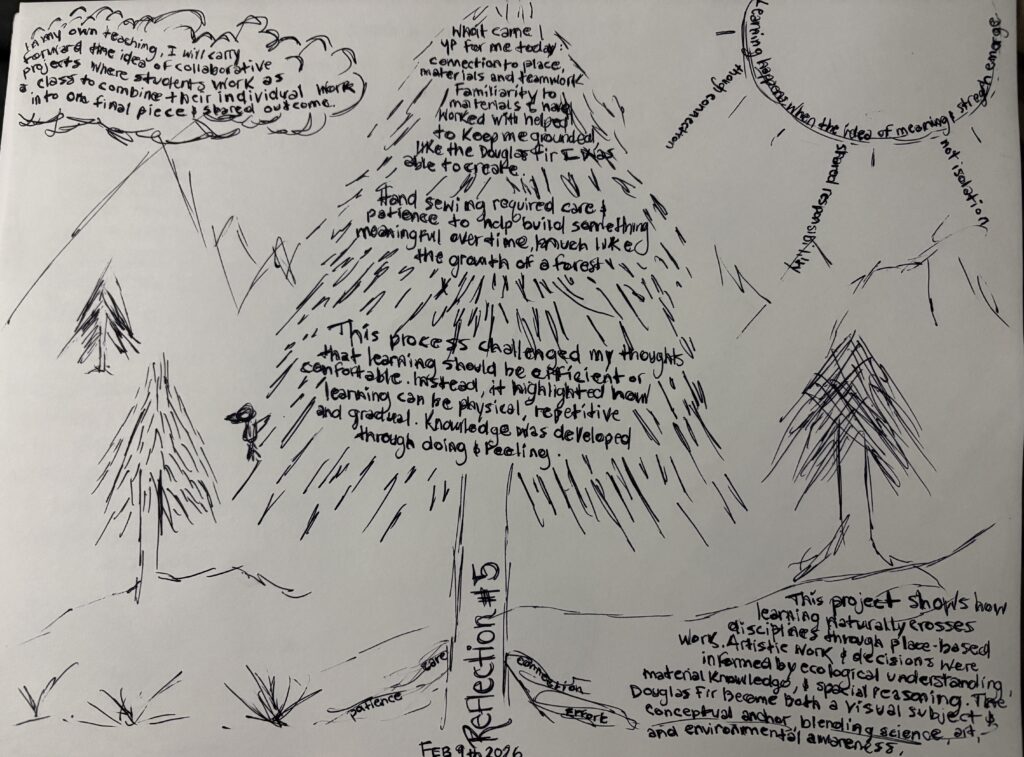
This piece represents the Douglas fir. I wanted to create a full landscape to emphasize its strength, adaptability, and place within local forest ecosystems. From the beginning of the project, I knew I wanted to work with yarn to crochet, as it is a medium I feel deeply connected to and passionate about. The textured stitches reflect the dense needles and layered growth of the Douglas fir, while the variation in tree size suggests different stages of growth and their roles within the forest. Ecologically, the Douglas fir is a keystone species that provides shelter, stability, and connection for surrounding life, reinforcing the idea that even individual elements are essential to the health of the larger ecosystem.

The process began by laying out the felt base, intentionally leaving space around the edges to allow the quilt to be sewn together as a collaborative class piece. I then cut and sewed the sky and mountains, building the background before attaching the crocheted trees. The trees were sewn on next, followed by the final details of the trunks, which helped ground the landscape visually. I used acrylic yarn crocheted with a 3.5 mm hook for the trees, felt for the background, embroidery thread for the mountains and tree details, and sewing thread for the sky and trunks. While the hand-sewing process was time-consuming and often painful on my fingertips, every poke was worth it to see the piece come together. Within the quilt, this square contributes texture, grounding, and a sense of place, symbolizing how each individual piece, like each Douglas fir, plays a vital role in sustaining the whole ecosystem.

Self Assessment Checklist

  • Intentional use of the space (Complete)
  • Multiple materials (2+) (Complete: 4 Materials)
  • Your element, represented within the context of our local forest ecosystem (Complete)

Monochromatic Atmospheric Perspective

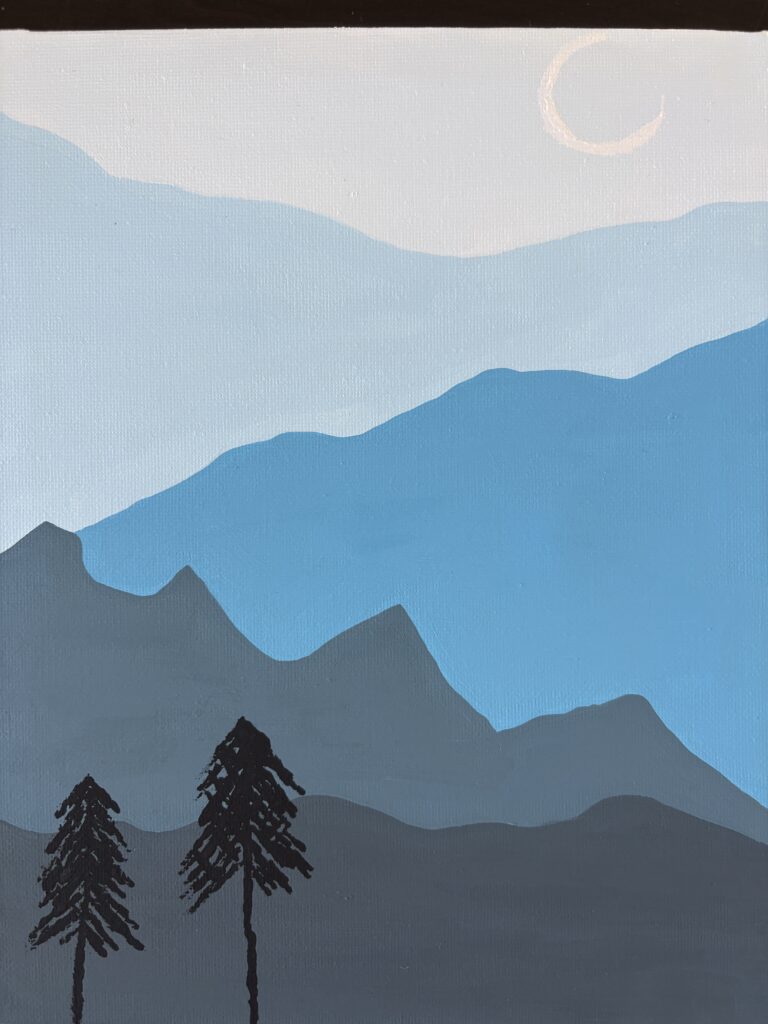
Artist Statement – “Where the Pines Rest

This piece explores depth, stillness, and atmosphere through intentional colour mixing and layered composition. Using acrylic paint and an angled brush, I focused on building a landscape through gradual shifts in hue and shade.

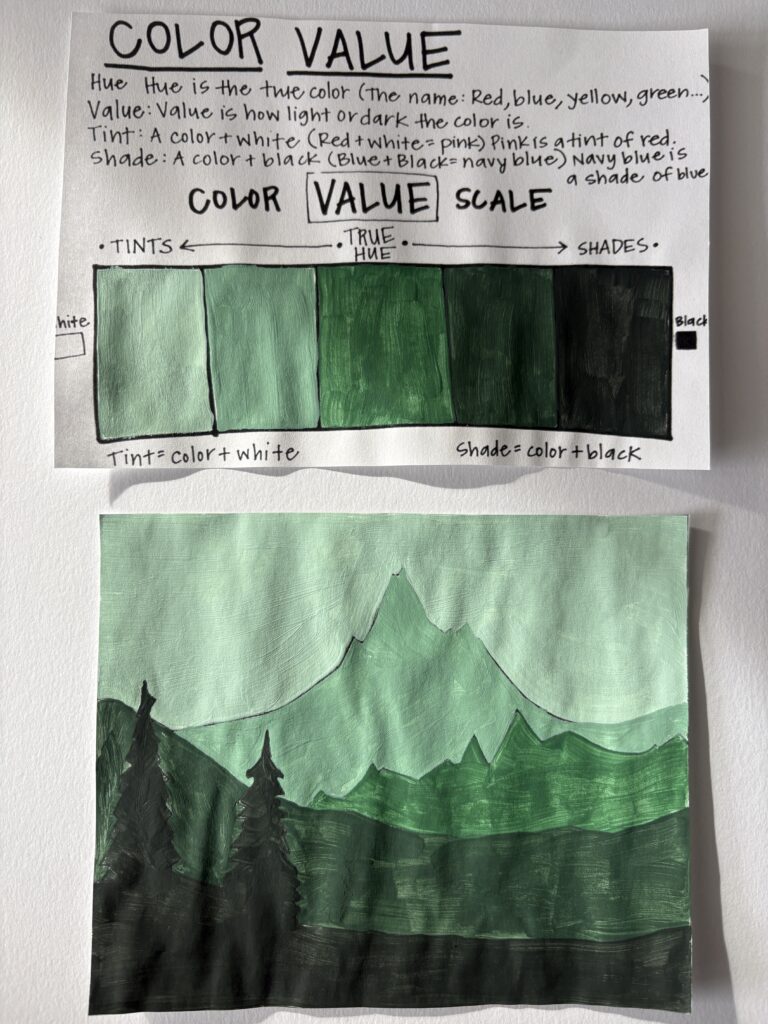
We began this piece by practicing color value. First, we created a value scale using one true hue (green). We mixed tints by starting with white and slowly adding green, and mixed shades by starting with green and gradually adding black. This helped us clearly see how value changes from light to dark.

Once we understood the range of values, we applied those mixes to a landscape. We started with the lightest tint at the top of the page and worked downward, gradually using darker values to create depth in the mountains and foreground. The darkest shades were used in the trees and front layer to show contrast and perspective.

This practice helped us understand how value creates space, dimension, and mood in a painting.

Before beginning my canvas painting, I mixed all of my colours in advance. Starting with a true blue as my base, I created a range of light tints by beginning with white and slowly blending in blue. I then developed deeper shades by starting with blue and gradually adding black. Preparing the full spectrum beforehand allowed me to move confidently through the painting process, focusing on placement and layering rather than remixing along the way.

I began at the top of the canvas with the lightest tint and worked my way downward, gradually transitioning into darker values. This method created a sense of depth as each mountain layer became richer and more grounded. The angled brush helped define the soft, rolling silhouettes of the landscape.

The white crescent moon and the black trees were added at the end to complete the composition. The moon brings balance and quiet contrast to the open sky, while the silhouetted trees anchor the foreground and provide a strong visual frame.

This work is about atmosphere more than detail. About the feeling of standing in stillness, surrounded by layered mountains at dusk. Through careful preparation and gradual tonal shifts, the piece reflects both planning and calm presence in the creative process.

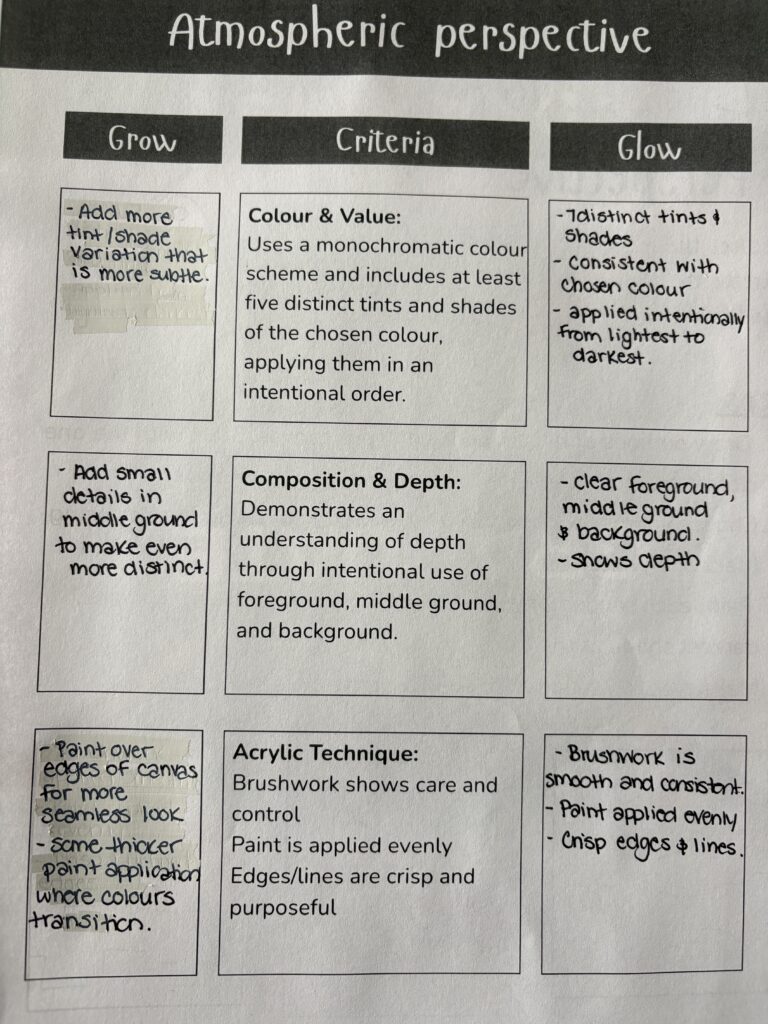
Self Assessment

Cardboard Loom Weaving

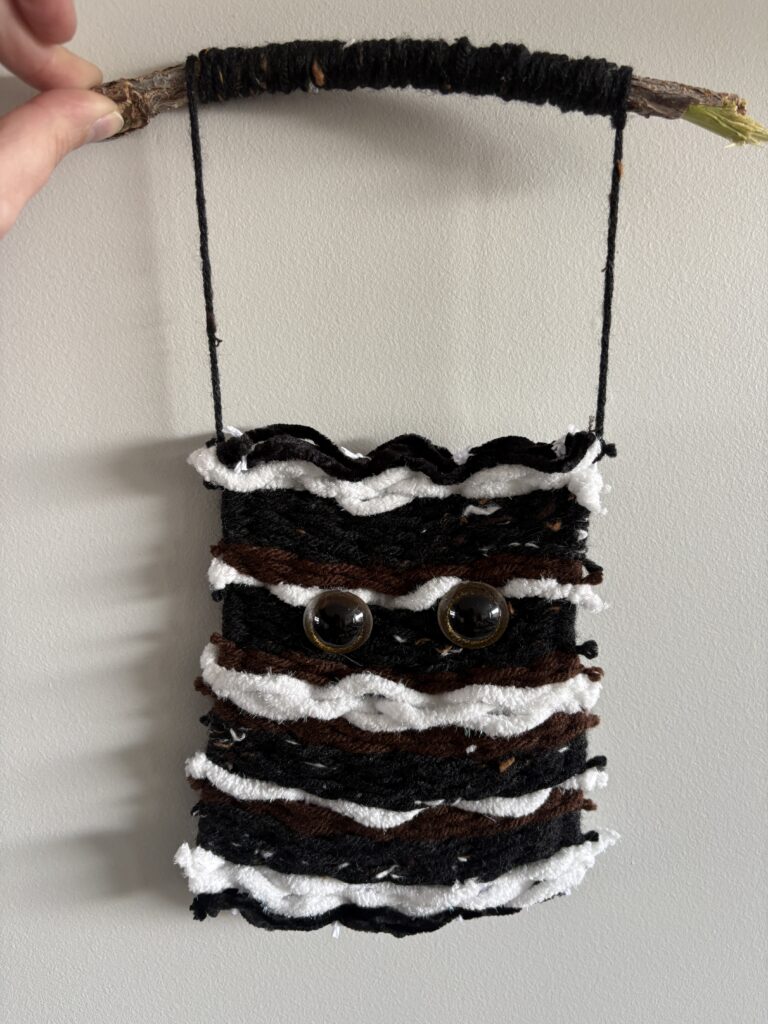
Artist Statement – ā€œFiber Friendā€

This piece started as a simple weaving project and slowly turned into a fuzzy little creature with a personality of its own.

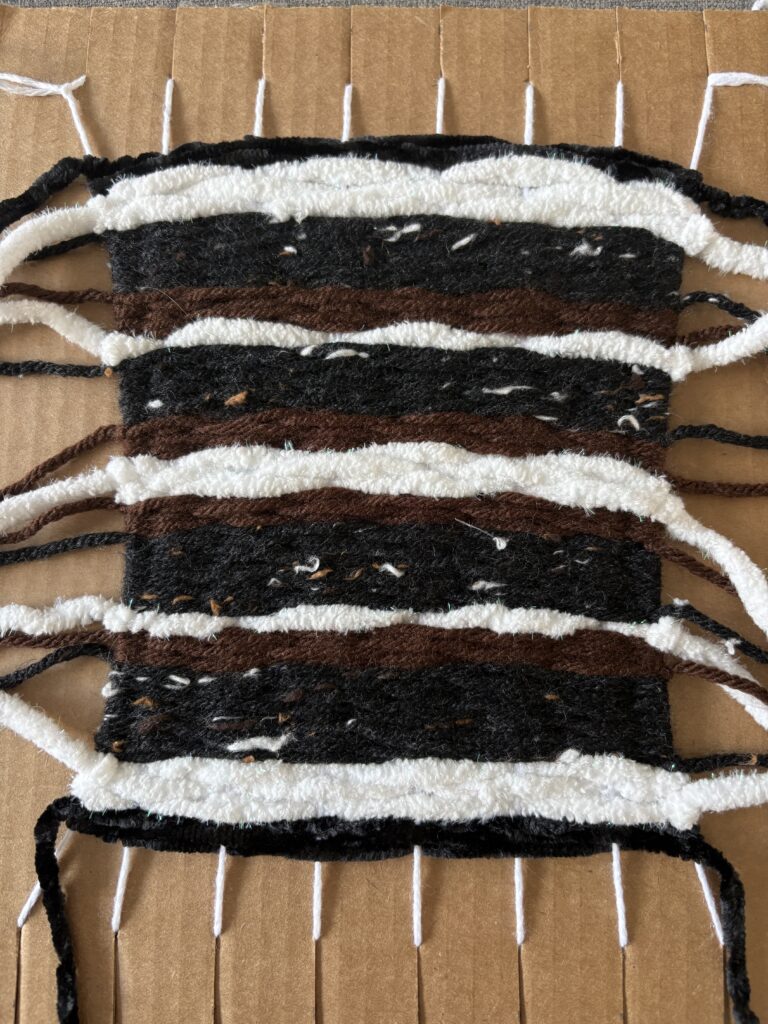
Step one was building my loom board. I cut a 9×11 piece of cardboard and added 8 slits across the top and bottom, each about 2.5 cm apart and cut 1 inch deep. Then I used white cotton yarn and looped it up and down through the slits to create my working area (warp). I made sure the tension was just right by giving the strings a little snapping test against the board, tight, but not bending the cardboard. Very official quality-control moment.

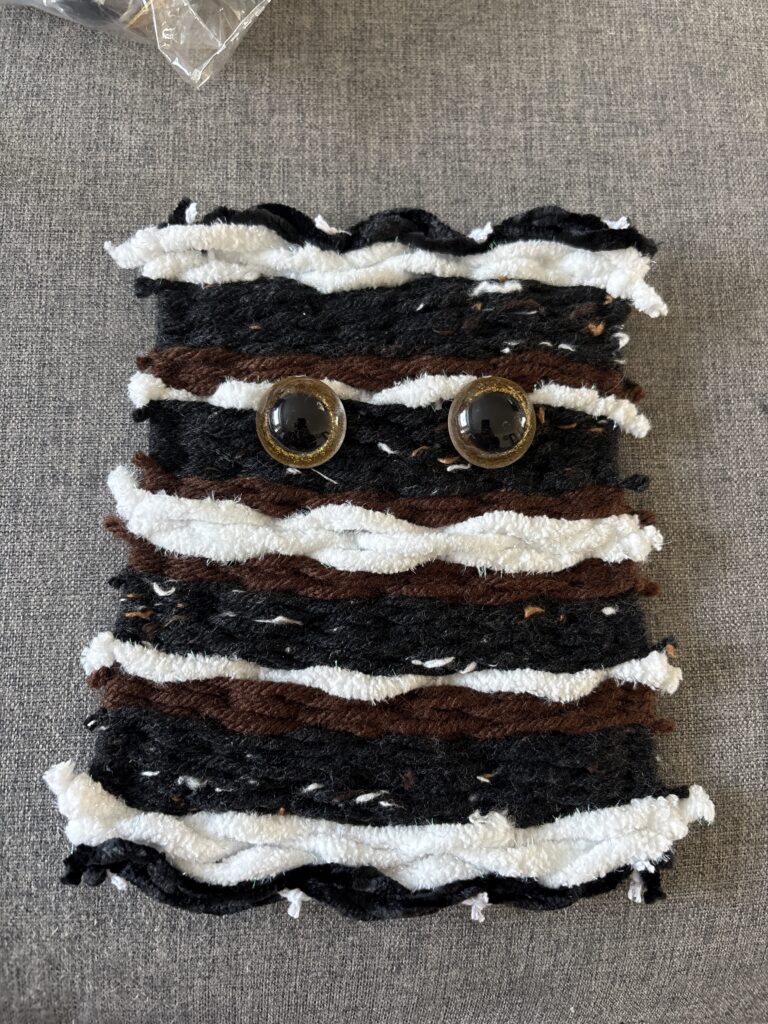
From there, I started weaving using acrylic yarn and thick blanket yarn. I loved mixing the textures. The smoothness of the acrylic is complemented by the fluffy, chunky blanket yarn that adds bold, wavy stripes. I alternated black, brown, and white to create strong contrast and rhythm. The thicker yarn naturally bubbled and curved, giving the piece movement and softness instead of perfectly straight lines. I leaned into that organic look rather than fighting it.

Once the weaving was long enough, I carefully removed it from the loom, tied off the warp threads tightly, and trimmed everything neatly. That’s when the personality appeared. I had these oversized eyes from previous creations just ā€œkicking aroundā€ the house and chose to add them. Suddenly, the weaving stopped being just a textile sample and became a character. Curious, slightly goofy, and full of charm.

Mounted on a natural stick, the final piece feels playful and alive. It’s a reminder that art doesn’t always have to be serious. Sometimes it just needs texture, contrast, a little experimentation, and a pair of unexpected eyes to bring it to life.

Self Assessment Checklist

  • My weaving is at least 6 inches long (Complete)
  • My thread tension is correct (no holes from very loose thread/yarn) (Complete)
  • Loose ends are trimmed neatly (Complete)
  • Work was carefully removed from loom, warp threads pulled tightly and tied neatly (Complete)
  • Extension: Added a stick to hang the piece and glitter eyes for a fun, whimsical finish.

Collaborative Partner Painting

Artist Statement – “Soft Boundaries”

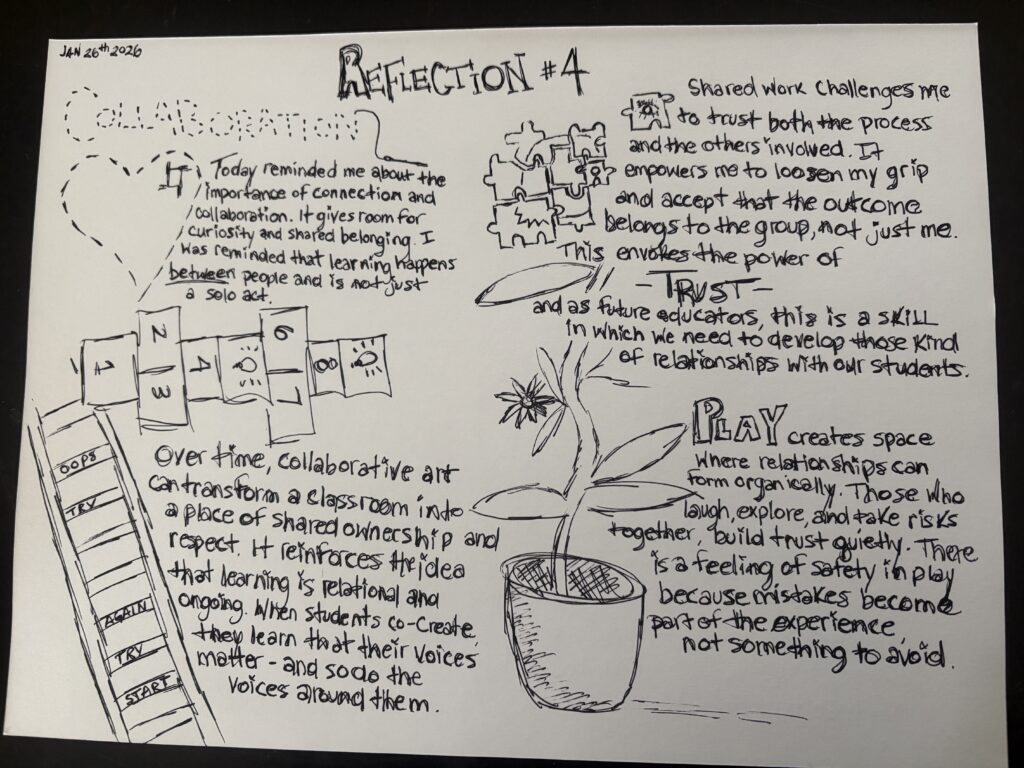
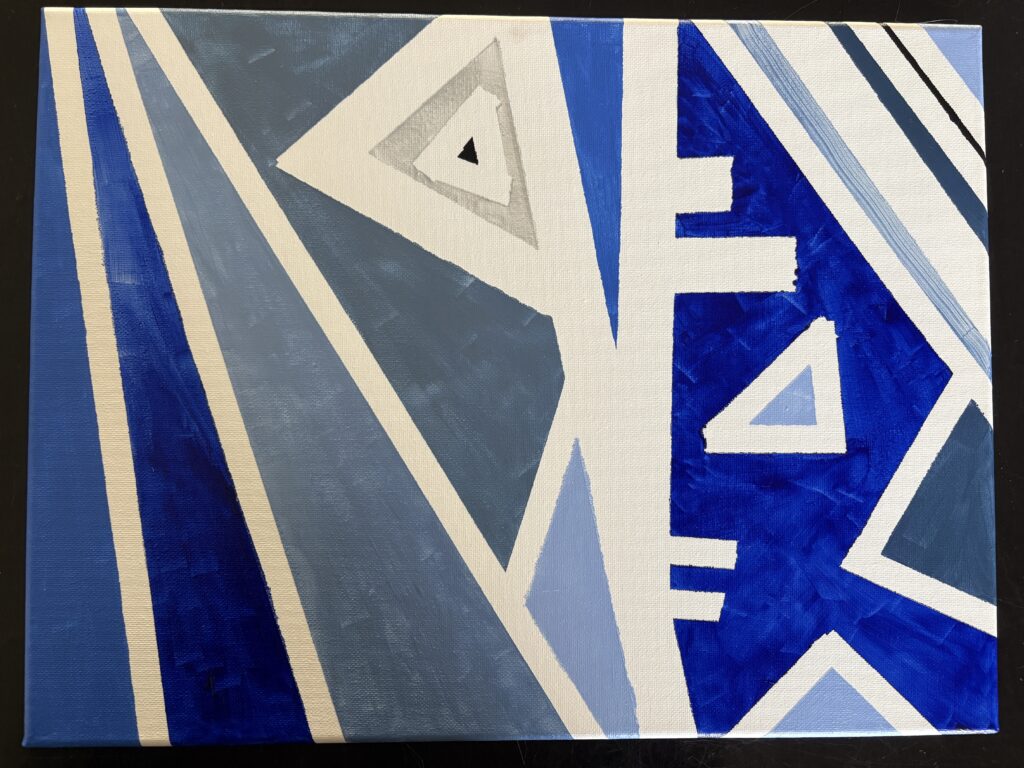
This piece was created collaboratively, with each person taking turns painting a section of the canvas. We began by using masking tape to divide the surface into sections, which gave the process structure and clear boundaries. While this felt grounding at first, it also meant that I had to respond to choices I didn’t make myself.

In the early stages, the painting felt fragmented and uncertain. I noticed my own struggle with letting go of control, wanting to plan ahead, refine, or correct what was already there. Working within a monochromatic blue colour palette became a way for me to focus on cohesion rather than control. By exploring changes in tone and value instead of introducing new colours, I could respond more intuitively to the work as it evolved.

As the taped divisions softened and sections blended together, the piece became a reflection of the collaborative process itself. The final work holds evidence of learning to trust others, accept unpredictability, and allow the painting to become something I couldn’t fully direct. In this way, the process challenged me to loosen my grip and find meaning in shared creation rather than complete control.

Bundle Dye

Artist Statement – ā€œTropic Sunsetā€

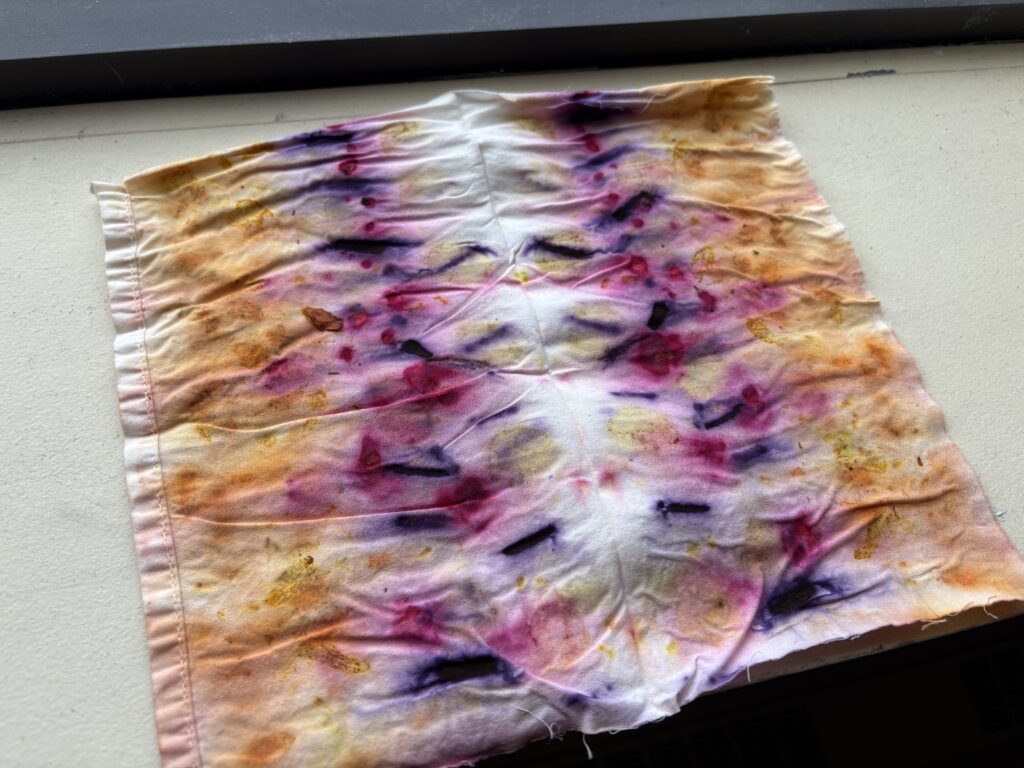
To create this piece I used eucalyptus leaves, log wood, cochineal bugs and tango cosmos. These were then rolled tightly between layers of wet cotton and left to dry for a week. I went into creating this with no expectations and genuinely had no idea on how to visualize what the outcome would be. The finished product surpassed anything I could have imagined. It’s like the pieces of nature called to me and embodied me in colour form.

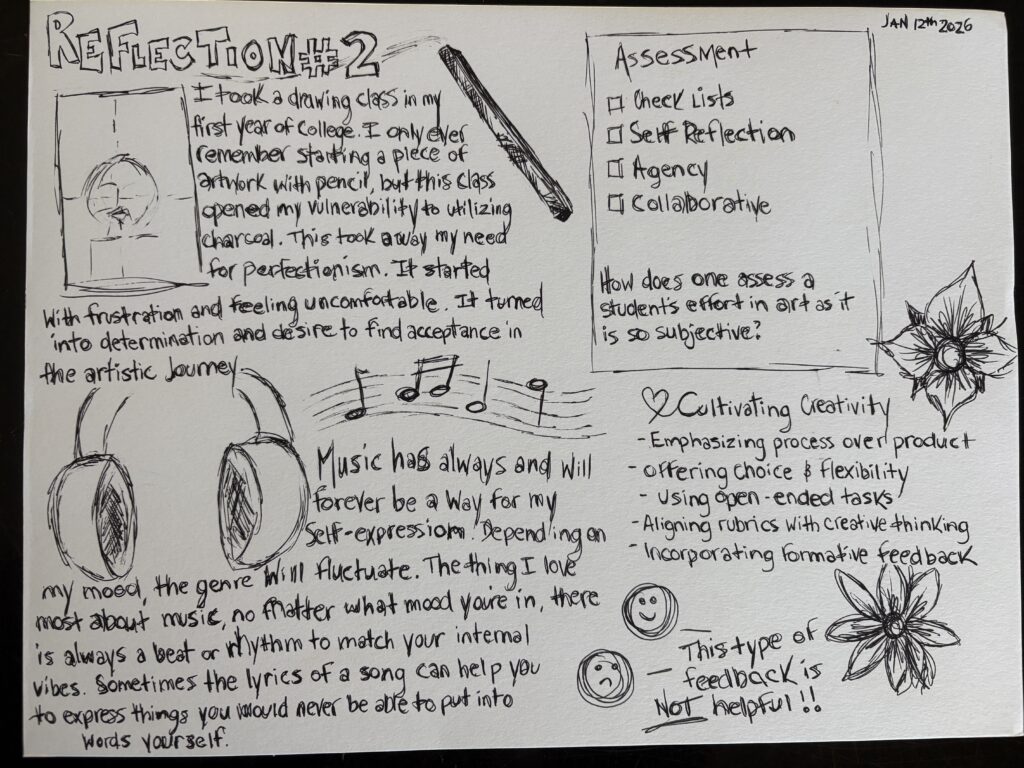
The yellow and oranges on the outside I find represent my firey outward projection. The strong purple lines is the wall I tend to put up. I don’t allow too many people into my inner circle in fear of being hurt by friendships again. The soft yellow in the center is my gentle and compassionate interior that not many get to see.

Wire Sculpture

Artist Statement – ā€œSurrenderā€

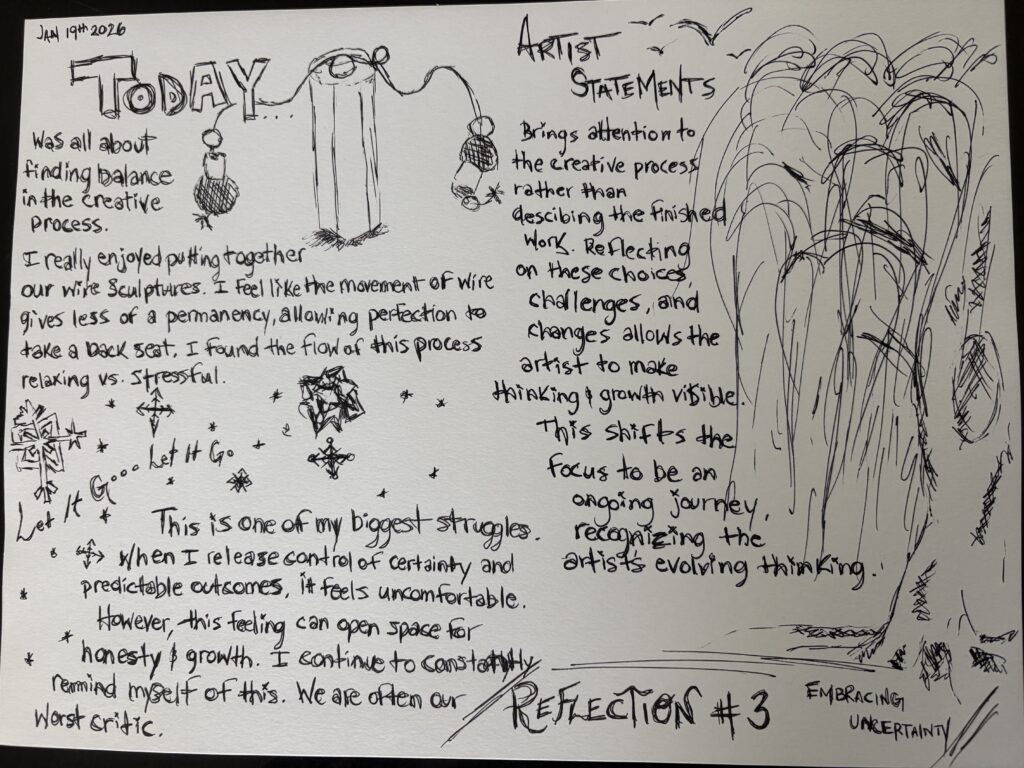
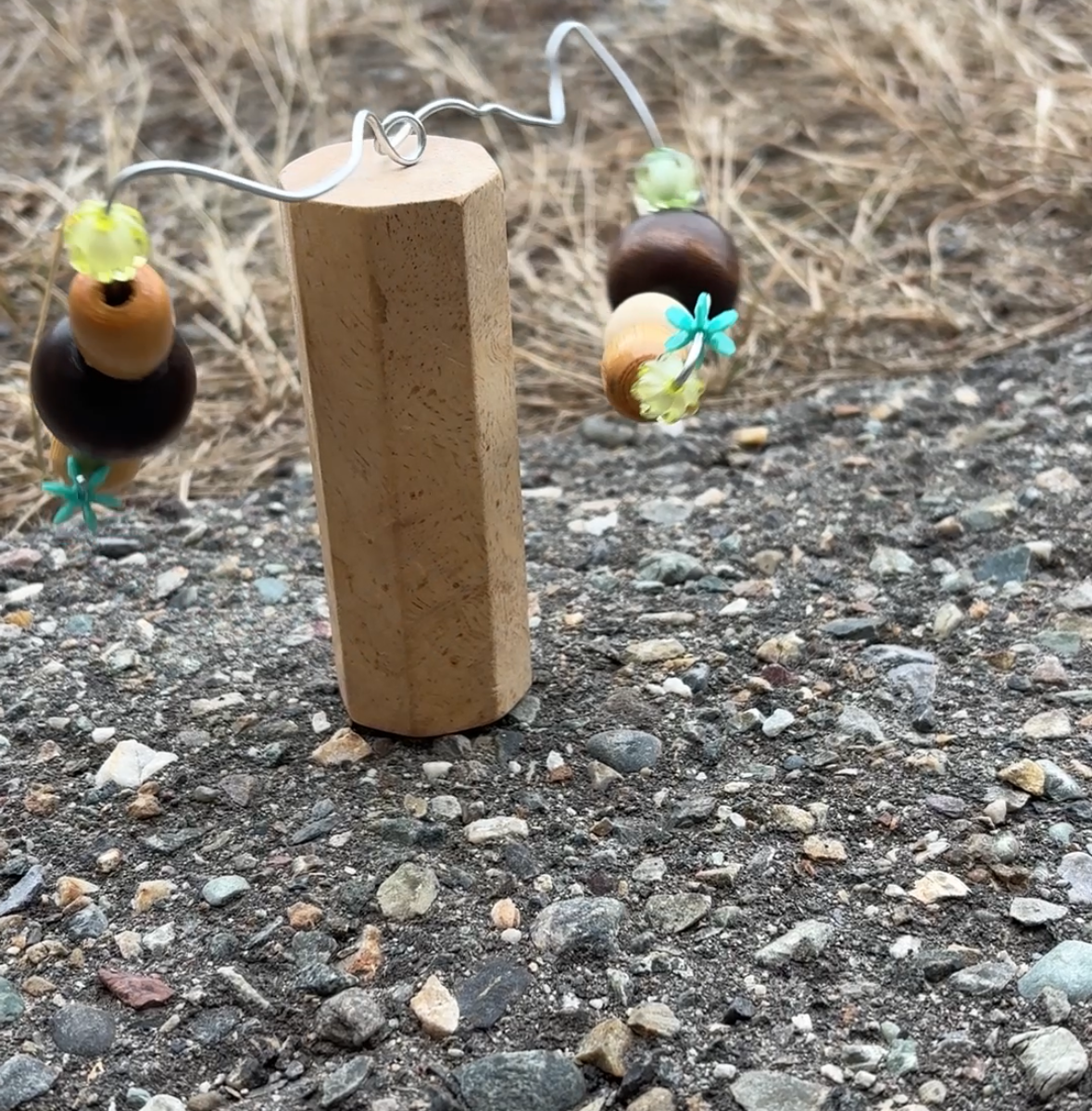
Creating this piece, I initially thought that making a design with the wire would be fun. I picked assorted sizes of beads to try to differentiate the two sides as I find symmetry less appealing to the eye. Like myself, I like to create things that are a little more edgy. I started out with a bigger block of wood but then switched to a smaller block as I wanted my piece to have a spinning movement and found it was difficult to achieve with such a wide block. I found that planning for this piece made things more frustrating. I was not getting the movement I wanted, so I decided to just take an abstract approach and just move the wire around, beads on each side, to find a balance point that I found soothing.

I love how much calm the movement of the piece brings. I feel like I channeled my current mood of stress and anxiety into the wire to help create feelings of zen and acceptance. I titled my piece as ā€œSurrenderā€ as that is what I needed to do to create it. Completely surrender to the process, surrender to my feelings, and surrender to this time to be creative.

If I were to do again, I would love to experiment with different weights of wire and other pieces of materials for countering the weight.